Recycling and Sustainability for Landscaping Bermondsey
 Landscaping Bermondsey is increasingly shaped by a simple idea: beautiful outdoor spaces should be created and maintained with less waste, lower emissions, and smarter material use. From garden clearances to soil renewal and planting projects, sustainable landscaping in Bermondsey is not only about the finished look, but also about what happens to the green waste, rubble, timber, and packaging generated along the way. By choosing recycling-led methods, local projects can support a cleaner borough and a healthier urban environment.
Our recycling and sustainability approach is built around practical targets. A core goal is to divert at least 85% of non-hazardous landscaping waste from landfill, with a longer-term ambition to move beyond 90% through better sorting and reuse. That means separating green waste for composting, sending inert materials such as stone and soil for recovery, and keeping reusable timber, metal, and plastics in circulation for as long as possible. For landscaping in Bermondsey, every load is assessed for reuse, recycling, or responsible disposal before anything leaves site.
We also work with local transfer stations and recycling depots that are suited to mixed landscaping materials. These facilities help process soil, hardcore, branches, turf, and general site waste efficiently, reducing unnecessary haulage across London. In practical terms, that can mean directing clean soil and aggregates to a transfer station where they can be screened and repurposed, while green arisings are sent into composting streams. This localised route supports lower emissions and helps keep the overall environmental footprint of Bermondsey landscaping projects under control.
 A strong sustainability strategy also depends on how waste is separated on site. In boroughs across inner London, waste separation is becoming more specific, with clearer streams for garden waste, soil, wood, metal, plastics, and residual waste. Bermondsey landscaping projects benefit from the same approach: mixed skips are avoided where possible, and materials are sorted at source so that recycling rates stay high. This is especially important when dealing with post-project cuttings, broken planters, old fencing, and packaging from deliveries.
We also recognise the importance of partnerships with charities and community groups. Usable materials such as surplus paving, timber offcuts, healthy plants, compost bags, and garden accessories can often be donated rather than discarded. By working with local charities, community gardens, and social projects, landscaping Bermondsey can support initiatives that improve shared spaces while extending the life of useful materials. Reusing first, recycling second, and disposing last remains the guiding principle.
These partnerships are particularly valuable in an area where space is limited and public greenery matters. Small donations of plants or materials can help school gardens, supported growing projects, and neighbourhood planting schemes. Even when items are not suitable for direct reuse, they may still be processed into recycled feedstock. This layered approach ensures that Bermondsey landscaping waste management contributes to both environmental and social value rather than becoming a burden on local disposal systems.
 Transport is another major part of the sustainability picture. Low-carbon vans are used wherever possible to reduce emissions associated with moving tools, materials, and waste between sites, transfer stations, and storage locations. Electric or hybrid vans can significantly reduce local air pollution and are especially suitable for short urban trips around Bermondsey and nearby areas. In a dense borough environment, quieter vehicles also help reduce disturbance for residents, businesses, and passers-by.
Low-carbon fleet choices are paired with careful route planning, which reduces unnecessary mileage and limits repeated journeys. That means one vehicle may collect recyclable green waste, deliver fresh planting, and return with reusable materials in a single efficient schedule. For landscaping Bermondsey services, this combined approach helps cut fuel use while maintaining reliable project delivery. It is a practical way to make sustainability visible in everyday operations, not just in policy statements.
We also aim to minimise waste before it is created. Ordering materials accurately, selecting durable products, and preferring recycled-content supplies all help reduce the amount that reaches a transfer station in the first place. Where appropriate, composted soil improvers, reclaimed timber, and recycled aggregates can be incorporated into design and maintenance work. These choices strengthen the circular economy and ensure that landscape improvements in Bermondsey are aligned with modern environmental standards.
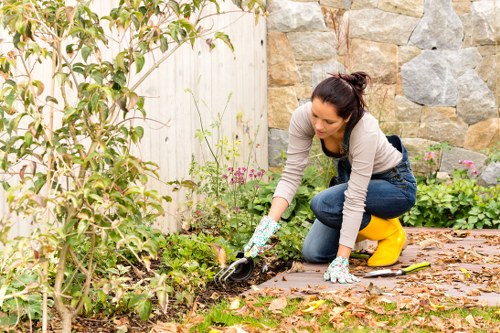
 Another important element is the responsible handling of green waste. Branches, grass cuttings, leaves, and plant trimmings can often be turned into mulch or compost instead of being treated as refuse. In Bermondsey, where many gardens, courtyards, and communal outdoor spaces are compact, frequent maintenance can generate a surprising volume of organic material. Separating this stream carefully allows it to be recycled into useful horticultural outputs, supporting healthier soil and more resilient planting schemes.
We also pay attention to material recovery from clearance work. Old sleepers, cracked pots, metal edging, broken fencing, and surplus decorative stone may all have recycling routes if sorted correctly. Where direct reuse is not possible, these items can often be broken down and processed through appropriate waste facilities. This is especially relevant for landscaping Bermondsey projects that involve refurbishing existing outdoor areas rather than starting from scratch, since renovation work often creates a varied mix of materials.
Sustainability is not a single action; it is a sequence of decisions made throughout a project. Choosing local transfer stations, prioritising donations to charities, using low-carbon vans, and setting ambitious recycling targets all contribute to a cleaner result. For clients seeking environmentally responsible landscaping in Bermondsey, the benefit is twofold: outdoor spaces are improved, and the process of creating them is aligned with lower waste and reduced carbon impact.
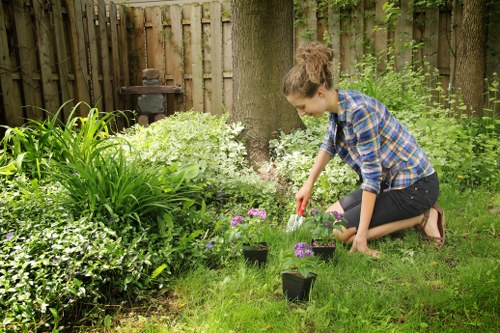 Looking ahead, the goal is to keep refining these practices so that more waste becomes a resource and fewer materials are lost to landfill. By supporting borough-wide waste separation habits, working with local recovery partners, and maintaining a strong recycling percentage target, landscaping Bermondsey can continue to move toward a more circular model. That means greener gardens, smarter logistics, and a more sustainable future for every project, from small courtyard refreshes to larger outdoor transformations.